Mary Helen Ponce- Biography
By Notable Hispanic American

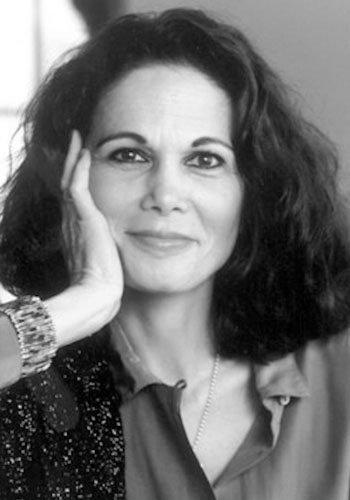
Writer Mary Helen Ponce married soon after she graduated from high school; and she chose to stay home and care for her four children until her youngest son  entered kindergarten. At that time, to the benefit of her readers and students, Ponce decided to educate herself and to write about her culture. While in her work the courageous Ponce embraces  this culture, she has not hesitated to fictionally discuss its more problematic aspects in  her collection of short stories, Taking Control, and her novel The Wedding.

Ponce was born January 24 1938, to Tranquilino Ponce and Vicenta (Solis) Ponce in Pacoima, California. While in the telephone interview with Ronnie-Richele  Garcia-Johnson, Ponce acknowledged that Pacoima was a bit like Taconos, the fictional town in the The Wedding she emphasized that The Wedding is not autobiographical; Ponce  didn't not grow up as Blanca of her novel did .Pacoima was for Ponce, a good town with many nice families". Ponce also credits her parents, who had a "terrific sense of   humor", and her very intelligent sisters who served as a rol models for the young girl, for her "very happy childhood". As she told Garcia-Johnson, Ponce realized that "learning" was her "happiness" and, because of this, she was determined to educate herself when her youngest son was  old enough to enter school in 1974. After earning her bachelor degree from California State University in 1978, Ponce went onto receive a a Master's Degree from the same University in 1980. Ponce studied from 1982 to 1984 at the University of California at Los  Angeles, where she was the recipient of the History Department's Danforth Fellowship, and worked toward her Ph.D. at the University of New Mexico in 1988. Ponce then served as an  instructor of Chicano studies from 1982 until 1987 at UCLA; she was an adjunct professor from 1987 to1988. Ponce also taught at the California State university of Northridge,  she was a member of the adjunct faculty at the University of New Mexico in the  Women's studies program from 1988 to 1982. In addition studying women and Mexican American culture, Ponce has served an organizations which focus on the same subject,  including the Mexican American National Women's Association, the National Association of  Chicano Studies, the Western Association of Women Historians, and Mujeres Activas en Letras y Ciencias Sociales.

Although studying, teaching, participating in various organizational activities and caring for a family keep Ponce busy, she has managed to find time to write. She has contributed stories to magazines throughout the Southwestern United States and Mexico; during the early tomid1980's, Nuestro magazine published several of her stories. In 1987, Ponce have written enough good stories to published her first collection taking control, and by 1989, she had finished her first novel, The Wedding, Ponce's short stories and Taking Control have being warmly received, and women have specially enjoyed The Wedding. As the book's title suggests, the nine stories in Taking Control are about Hispanic women who do or do not take control of their lives. One of the most striking  stories of this collection is "La Josie"; La Josie inadvertently frightens young, divorced mother  when, every weekend she pounds on her door to escape her abusive husband. The narrator of  the story can not believe it when, the morning after every fight, La Josie once again  appears to be in love with Pete, her husband. The narrator has her own problems with man; her second  husband expects her to wash his jeans in hot water so they will fit him more tightly  then runs off with a seventeen year old girl. Upon seeing La Josie some years later, the  narrator recounts, "Yesterday I saw La Josie.....and I saw myself" .

More than presenting problems specific to women, some of the stories in Taking Control, such as "the Campout", "The News Affirmative Action Officer" and "The Permanent", deal with the Mexican-American dilemma: How can the Mexican American live comfortably in American society while maintaining respect for their culture? How should the educated or assimilated Mexican American react to criticism of those who persist in  speaking Spanish and continue to work in the fields? How should those Mexican Americans who "have" made it in American treat those who have not?

The last story in the collection " The Permanent" seems to answer these questions. After becoming angry and embarrassed at the sight of Mexican Americans who could not speak English who dressed like Mexicans, and after pretending not to understand Spanish herself, an elderly Mexican American woman finds herself defending them. She  realizes that she was wrong to feel anger and embarrassment: "Her anger was spent. But she felt guilty. Very guilty . She thinks "I will no longer impose my value system on other Mexicanos. I will not think of them as different bust as us. And I will be of some help. "In addition to presenting more assimilated Mexican Americans with a solution, the author of "The Permanent" seems to have created a guideline for herself: with her  writing, Ponce is being of "some help".

Not everyone , however, would agree that Ponce positively contributes to Mexican American literature. Alejandro Morales, an instructor of Chicano literature at  the University of California of Irvine discussed Ponce's first novel "The Wedding" (1989)   in the Los Angeles Times. According to Morales, the book presents a "vision" which is "grotesque satire, naturalistic caricature that tends to bolster already damaging  stereotypes of Mexican Americans"."The Wedding" wrote Morales "is not an uncommon story. It has been told too often. Ponce's version is sadly naive, contradictory and insulting. Her story ignores the positive contributions of Chicano blue-collar workers,takes away their dignity, pride and history."The Wedding" is best left unread". In her interview with Garcia Johnson, Ponce answered such criticism, insisting that The Wedding, which was originally a longer work, is first and foremost a  "love story". She also stated that she wouldn't apologize for her work because "its honest". While many people cannot understand how Blanca could love Cricket, Ponce reminds readers  that during the 1950's, there were not too many expectations for women. Blanca had no hope educating herself, and she had no choice but to marry. Growing up in the environment he did, Cricket never had a chance either. The couple, according to the author, "didn't  know any different".

Ponce told Garcia-Johnson that, since 1990, there has been a "terrific conflict" between her work as a writer and her scholarly work: she loves to write as well as study history and literature. Consequently, since the publication of "The wedding" Ponce
has continued to write as well as teach. She contributed to Phoebe: An interdisciplinary  Journal of Feminist Scholarship Theory and Aesthetics in 1990, and to Frontiers:A journal of  Women Studies.A monograph Ponce has written, The lives and works of Five Hispanic New Mexican Women Writers 1978-1991 :Short Biographies, and an autobiography, Hoyt Street.

-Sketch by Ronie-Richele Garcia-Johnson
Biography By Notable Hispanic American